
Free in-home measure and quote - PGT, CGI and CWS impact lines compared on your actual openings, style by style
Sliding glass doors
Impact garage doorsPGTCGI
 Before
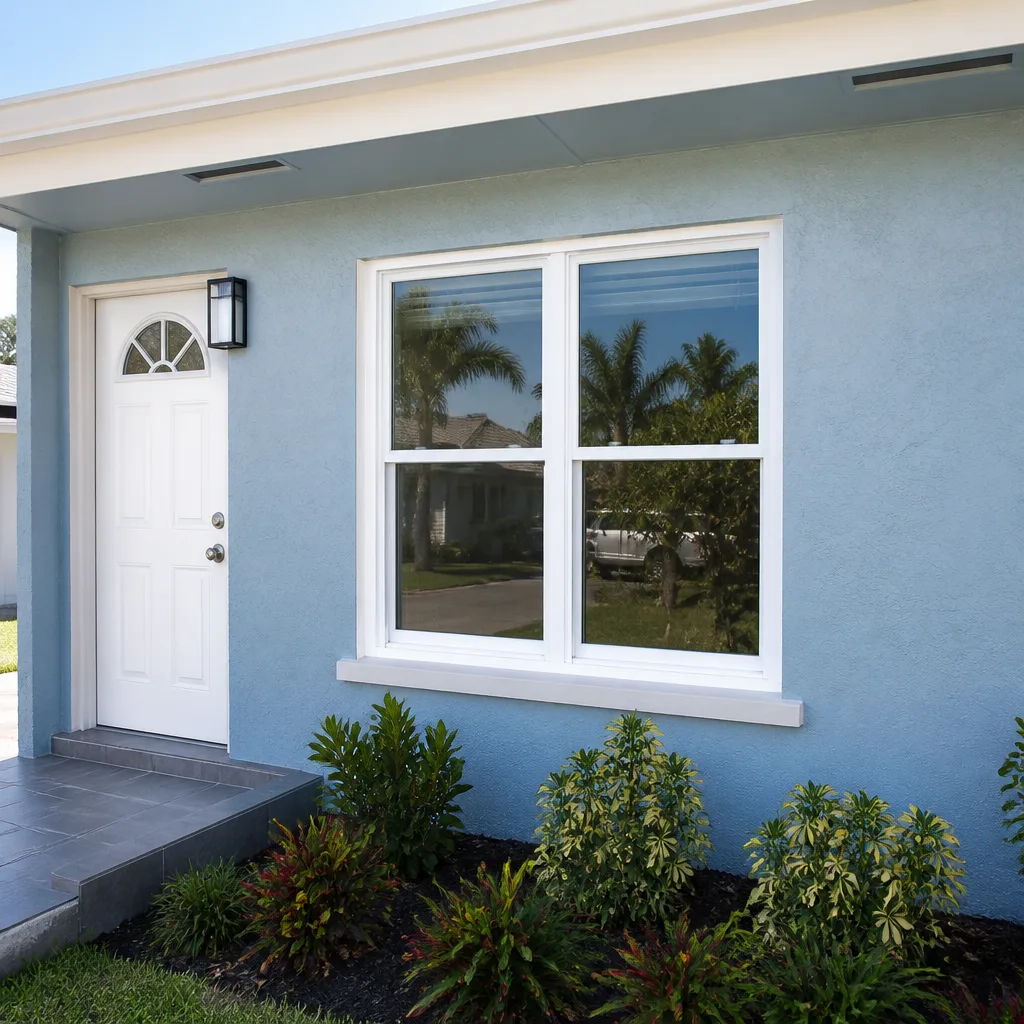 After
After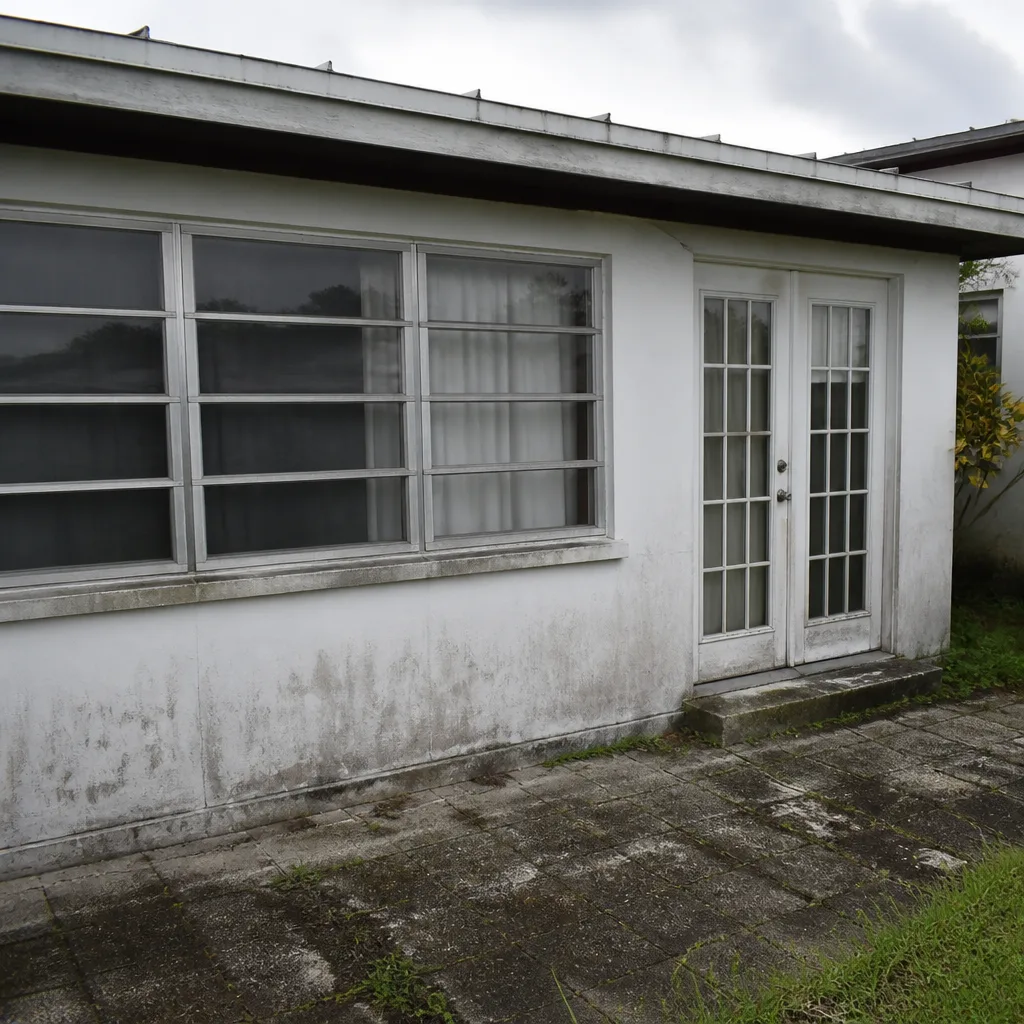 Before
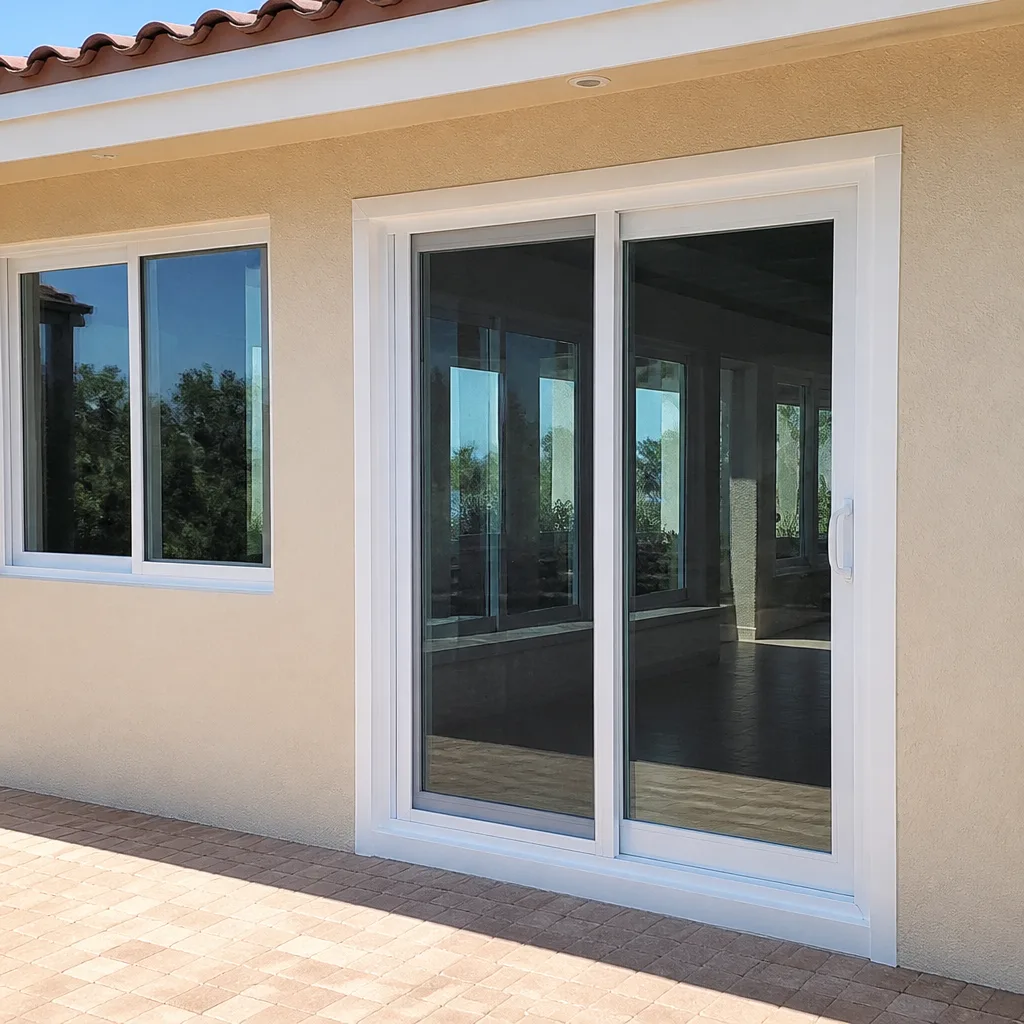 After
After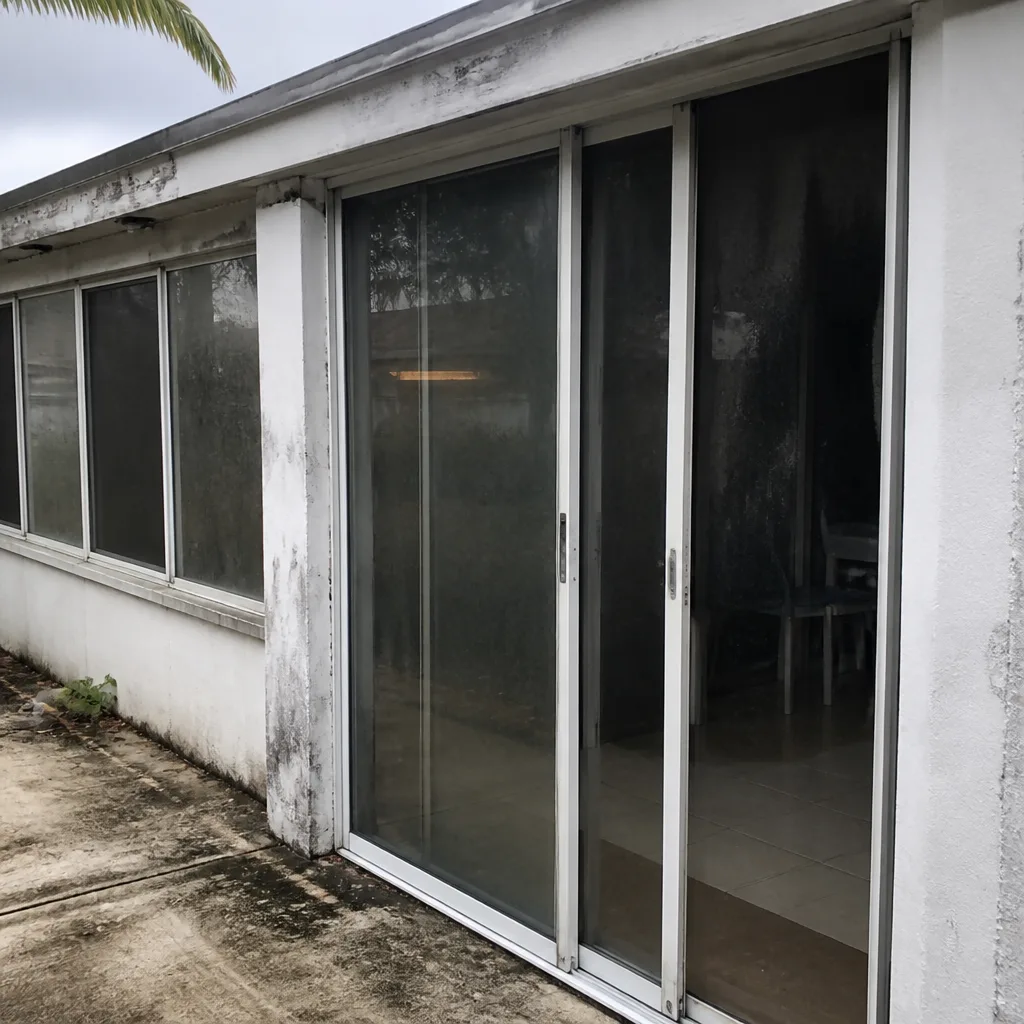 Before
 After
AfterThe Short Answer: “Hurricane Proof” Is Marketing. Impact-Rated and Storm-Rated Are Code Terms That Matter.
No window is truly hurricane proof. When homeowners in Riviera Beach ask us the difference, we tell them straight: impact windows and storm-rated windows are tested, code-compliant products built to survive wind-borne debris and pressure cycling. Hurricane proof is a sales phrase that appears nowhere in the Florida Building Code, and if a contractor uses it around Singer Island, that’s your cue to keep shopping. The practical distinction you need to know is this: impact-rated windows are glass tested to withstand a 9-pound 2×4 fired at 34 mph, while storm-rated windows meet design pressure (DP) ratings for wind load but may not carry the same missile-impact certification. In a coastal city like Riviera Beach, where high-rise condos face Atlantic wind loads and salt spray, the difference determines whether your windows pass a mandatory inspection or fail it. Call (786) 829-6722 if you need to know which rating your building requires.
What Those Terms Actually Mean on a Job Site in Riviera Beach
Dale Kessler, Owner at TruePane Windows & Doors, learned early in his career that homeowners rarely care about the vocabulary until the inspector hands them a correction notice. What they care about is whether the window holds when a Category 4 storm spins off the Gulf Stream and pushes debris across the dune line by Blue Heron Boulevard. That’s where the language gets specific.
Impact windows earn their rating through two tests under Florida Product Approval (FPA) and Miami-Dade County protocols. First, the glass and frame assembly must stop a 9-pound 2×4 launched at 34 mph without penetration. Second, the unit must survive 9,000 cycles of positive and negative pressure simulating hurricane-force gusts flexing the glass. When both tests pass, the product carries an FPA number, a wind-load rating, and a design pressure (DP) stamp. Those stamps are not decoration. On Singer Island, under Florida’s SB 4-D recertification law, high-rise buildings over three stories now face mandatory structural inspections, and windows are a primary focus. If the FPA rating on your replacement glass does not match the engineer-of-record’s wind-load spec for that elevation, the job gets red-tagged.
Storm-rated windows is a looser term the industry uses for any product built to a wind-load standard. The key is which standard and which test. A window can be storm-rated for a DP 35 inland location and be completely wrong for a DP 65 oceanfront exposure in Riviera Beach. Always check the DP number against the building’s elevation zone, not just the word “storm.”
Hurricane proof means nothing in code, nothing in product testing, and nothing in a warranty. We’ve replaced more than a few so-called hurricane-proof installations where the window survived but the frame leaked at the rough opening because the flashing was wrong. The glass is only as good as the installation. That’s the part no marketing brochure covers.
Why Riviera Beach Buildings Need More Than a Sticker
Riviera Beach splits into two distinct window worlds. Mainland neighborhoods, mostly post-WWII concrete block homes from the 1950s through 1970s, still hold original single-pane aluminum jalousie or horizontal sliders. Those old units predate modern impact code entirely and do not qualify as any kind of storm protection. Homeowners in those CBS homes call us because a rusted jalousie track has seized or because they’ve watched a neighbor get hit with an insurance non-renewal over their glazing. The fix is almost always full frame replacement, not reglazing. Salt air from Lake Worth Lagoon and the ocean corridor eats aluminum fast, and once a frame’s corner welds weaken, no amount of sealant brings it back.
Singer Island is a different animal. Those 1960s-through-1980s oceanfront condo towers are now aging into Florida’s post-Surfside milestone inspection mandates, and the window components are under a level of stress most inland properties never see. We’ve walked units where original sliding glass doors have not moved in years because the aluminum tracks corroded into a single piece. In the oldest buildings, glazing compounds may contain asbestos, which changes the abatement and handling protocol before a single frame is pulled. Every replacement on the island needs an FPA impact rating matched to a high-rise wind-load zone, association board sign-off, and often an engineer-of-record review. This is not the kind of work where you want a contractor learning on the job.
TruePane Windows & Doors has spent more than years in Palm Beach County, handling impact window replacements in these exact conditions. Dale grew up in the Blue Heron neighborhood, close enough to the inlet that he spent his teenage weekends watching the drawbridge cycle and learning that some things cannot be rushed. That same patience shows up in how we quote and set windows. We’d rather spend an extra hour with a laser level than get called back after the first big storm.
Impact vs. Storm-Rated: A Practical Comparison for Riviera Beach Homes
If you’re reading this because a contractor gave you two quotes and you can’t tell why one costs more, here is the plain-language breakdown.
- Testing difference: Impact-rated products pass missile-impact and cyclic-pressure testing. Storm-rated products may only meet wind-load DP standards. Impact windows are the safer default anywhere east of Congress Avenue.
- Code exposure: Riviera Beach properties, and especially Singer Island, sit in Palm Beach County’s highest coastal wind-load zone. Impact-rated units with correct FPA numbers satisfy the mandatory inspection and recertification pipeline. Storm-rated units often do not.
- Frame material: Salt corrosion is the silent killer of window performance here. PGT, CGI, and CWS all offer aluminum impact systems with marine-grade finishes that hold up against ocean air better than standard powder coating. We recommend sealed-frame impact products for anything within a quarter mile of the beach.
- Insurance documentation: Impact windows with FPA numbers are what Florida insurers want to see for mitigation credits and policy renewals. Generic storm-rated glass without the missile-impact test receipt usually earns no discount.
- Cost and lead time: Impact-rated lines from PGT or CGI generally run higher per opening than unrated storm glass, and high-rise Singer Island jobs add engineering and rigging charges. Expect most Riviera Beach single-family impact replacements to land in the range of $800 to $1,400 per opening installed, depending on size, DP zone, and frame condition. Condo tower work varies by elevation and FPA requirements.
How to Tell If a Window Is Actually Impact-Rated
Whenever we replace a window in Riviera Beach, we show the homeowner where to look. Every legitimately impact-rated window carries a permanent marking etched into the glass corner, often in the lower right or lower left. You’re looking for the manufacturer’s name, a test standard reference, a DP number, and an FPA or Miami-Dade Notice of Acceptance number. If you cannot see the etch, or the only proof the contractor offers is a receipt with the word “impact” on it, do not accept the unit. We have had homeowners call us after paying for impact windows that were just laminated glass with no FPA certification. Laminated glass stops debris better than annealed glass, but it does not satisfy the Florida Building Code’s impact-resistance requirement on its own, and it will not help you during a condo recertification review. Dale’s rule stays the same: if it is not right on paper, it will not be right on the wall.
What the Singer Island Recertification Pipeline Means for Window Decisions
SB 4-D does not mention windows by name in every line, but it does not need to. The law requires structural inspections and waterproofing evaluations for condo buildings over three stories, and windows are where water intrusion shows up first. On Singer Island, where ocean spray has been working on aluminum frames for 30 or 40 years, the inspection reports routinely flag windows and sliders as repair-or-replace items. Boards then vote on full impact replacement, and unit owners get a deadline. We’ve helped buildings phase the work floor by floor while keeping each unit’s FPA documentation straight for the engineer. That documentation matters when the mortgage company or insurer asks for proof. It also matters if the board gets audited. TruePane registers both manufacturer warranty layers in writing and hands the homeowner a file before our crew leaves the driveway. No scrambling in year two trying to prove what was installed.
What Goes Wrong When the Rating Is Wrong
We see three recurring failures in coastal Riviera Beach window work. The first is the wrong DP number. A DP 40 window set in an opening that needs DP 65 will flex too much in a storm, break the seal, and leak. It may not shatter, but the water damage and mold that follow are not covered by a typical warranty because the installation was out of spec. The second is a mismatched frame. You cannot pair a heavy impact-rated panel with a corroded, out-of-true frame from 1972 and expect it to hold. The frame carries the load. The third is a missed flashing detail at the rough opening. On oceanfront high-rises, wind-driven rain moves upward as much as sideways, and the sill pan flashing has to be absolutely right. Out of these three, the bad flashing is the one that costs homeowners the most because the leak shows up months later, after the next tropical storm. That’s the kind of problem The Keystone Standard exists to prevent. We measure every opening twice, quote the window system in writing with its test numbers, and register the warranties before we leave the job site.
FAQs
No. Hurricane proof is a marketing phrase with no code or testing definition, while impact-rated windows pass missile-impact and cyclic-pressure testing and carry Florida Product Approval numbers.
For a typical mainland Riviera Beach concrete block home, impact windows run about $800 to $1,400 per opening installed depending on size, DP rating, and frame condition; Singer Island condo towers add engineering and high-rise rigging costs. Call (786) 829-6722 for an exact quote, and we’ll walk the numbers with you in person.
Only if the storm-rated product’s DP number and FPA certification match the engineer-of-record’s wind-load spec for that specific elevation, which is why most Singer Island buildings under SB 4-D recertification end up requiring full impact-rated replacement instead.
Look for a permanent etched marking in the glass corner listing the manufacturer, test standard, DP number, and FPA or Miami-Dade acceptance number; if you cannot read that etching, your windows are almost certainly not certified and will not satisfy a Florida inspection.
Ready to Know What Your Riviera Beach Windows Actually Are?
If you’d rather have it looked at, TruePane Windows & Doors offers a no-pressure assessment in Riviera Beach. We’ll check the glass etchings, measure the openings, and tell you exactly what your building requires and what it will cost. Call (786) 829-6722 today. A live person answers, 24 hours a day. For more on our impact window work, see our Impact Windows & Doors in Riviera Beach page, or return to our home page to learn more about the company.
Written by Dale Kessler, Owner, TruePane Windows & Doors at TruePane Windows & Doors, serving Riviera Beach, FL.
Six Reasons Homeowners Choose TruePane Windows & Doors
Impact systems engineered to design pressures up to +/-100, matched to your wind zone - your openings hold when the storm arrives.
Low-E insulated impact glass from our manufacturer lines commonly cuts monthly cooling bills 20-30%.
Laminated impact glass shuts out up to 40% of outside noise - traffic, neighbors, weather.
Monitoring services run $30-90 a month. Laminated impact glass resists forced entry around the clock, with no subscription.
Florida homeowners average around 25% savings on the windstorm portion of their policy after protecting every opening - some homes qualify for more.
A full impact package upgrades curb appeal, buyer confidence and appraised value in one project.